

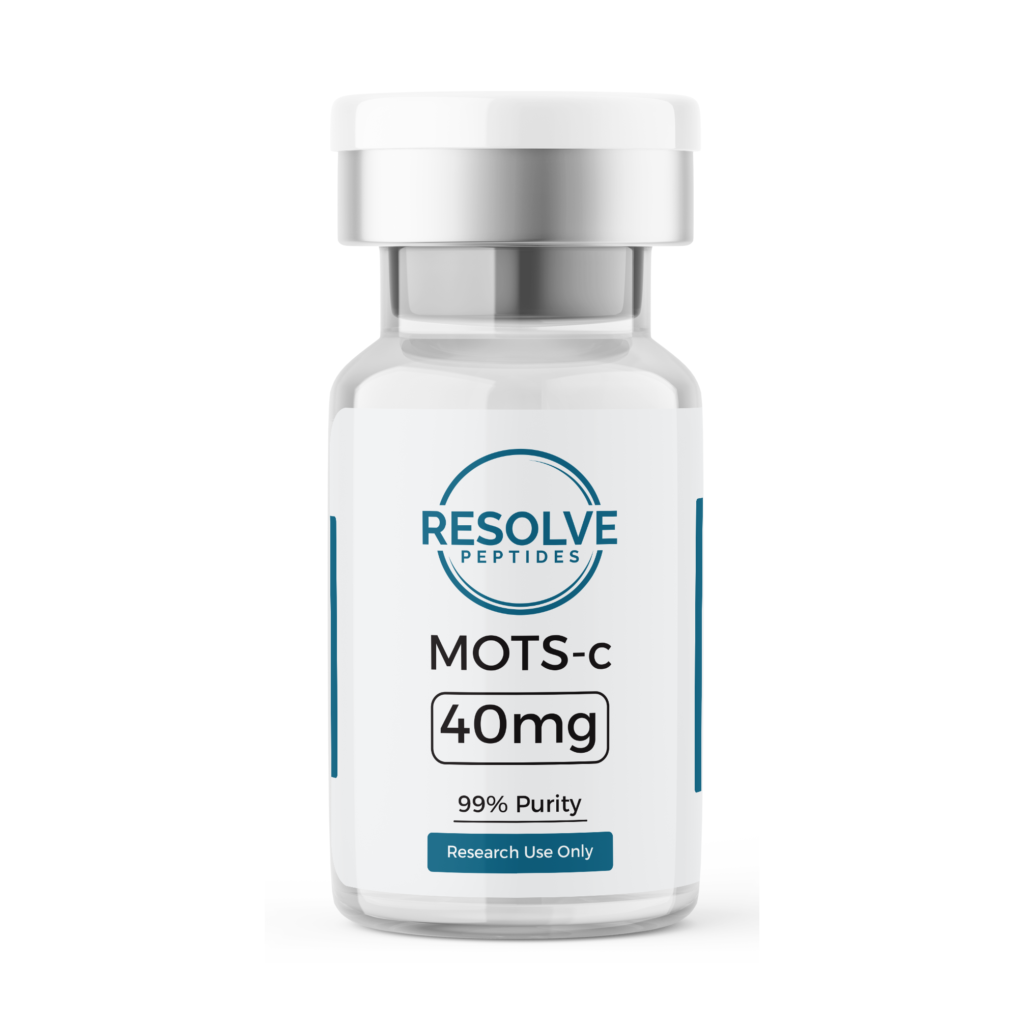
Description
MOTS-c (Mitochondrial Open Reading Frame of the 12S rRNA-c) is a synthetic peptide made up of 16 amino acids and belongs to a unique class of mitochondrial-derived peptides (MDPs). These peptides function as regulators of cellular energy metabolism, stress adaptation, and inter-organelle communication. Identified within the mitochondrial genome, MOTS-c has been the subject of growing research due to its influence on glucose utilization, insulin sensitivity, and overall metabolic homeostasis.
Experimental evidence suggests that MOTS-c is capable of interacting with both mitochondrial and nuclear gene networks, highlighting its dual role in cellular adaptation. This has positioned the peptide as an area of active preclinical investigation for its potential contributions to:
-
Enhancing glucose regulation and insulin responsiveness
-
Supporting skeletal muscle energy and endurance
-
Promoting fat oxidation and adipose tissue stability
-
Encouraging collagen synthesis and bone integrity
-
Preserving vascular and endothelial function
-
Modulating pathways linked to longevity and age-related health
MOTS-c Peptide Structure
-
Sequence: Met-Arg-Trp-Gln-Glu-Met-Gly-Tyr-Ile-Phe-Tyr-Pro-Arg-Lys-Leu-Arg
-
Molecular Formula: C101H152N28O22S2
-
Molecular Weight: 2174.64 g/mol
-
PubChem SID: 255386757
-
CAS Number: 1627580-64-6
-
Synonyms: Mitochondrial open reading frame of the 12S rRNA-c, MT-RNR1
Figure 1. MOTS-c skeletal formula and molecular data. Graphic by resolvepeptides.com.

Research Areas
1. Muscle Metabolism
MOTS-c has been shown to enhance skeletal muscle glucose uptake through AMPK activation, counteracting insulin resistance and improving muscle energy balance. In preclinical models, this effect has been linked to improved endurance and overall performance capacity.
2. Fat Metabolism
By stimulating fat oxidation and promoting metabolic flexibility, MOTS-c appears to protect against adipose tissue dysfunction and abnormal fat accumulation. These findings suggest a potential role in preventing obesity and related metabolic disorders.
3. Insulin Sensitivity
Studies highlight that MOTS-c may improve insulin signaling, particularly in lean models, which could be valuable for understanding and preventing the early onset of type 2 diabetes and insulin resistance.
4. Bone Health and Osteoporosis
Preclinical investigations reveal that MOTS-c can promote type I collagen synthesis and activate the TGF-β/SMAD signaling pathway. This activity supports osteoblast differentiation, bone density, and protection against osteoporosis.
5. Longevity
Genetic studies have associated specific MOTS-c variants with extended lifespan in certain populations, particularly in Northeast Asia. Researchers suggest its mitochondrial regulatory function may be a factor in promoting healthy aging.
6. Cardiovascular Function
MOTS-c has been explored for its protective effects on vascular health. By supporting endothelial cell activity and reducing dysfunction, it may play a role in maintaining cardiovascular balance and preventing heart-related complications.
Future Research
Ongoing studies continue to explore MOTS-c’s role in metabolism, cardiovascular protection, osteoporosis, and aging-related conditions. Its distinctive ability to influence both mitochondrial and nuclear gene pathways underscores its importance as a promising subject in metabolic and longevity research.

Disclaimer
All MOTS-c provided by resolvepeptides.com is strictly intended for laboratory research purposes only. These compounds are not approved by the FDA, are not medicines or dietary supplements, and are not for human or veterinary use. References to potential effects are based solely on preclinical findings.

Referenced Citations
-
C. Lee, K. H. Kim, and P. Cohen, “MOTS-c: A novel mitochondrial-derived peptide regulating muscle and fat metabolism,” Free Radical Biology & Medicine, vol. 100, pp. 182–187, 2016.
-
H. Lu et al., “MOTS-c peptide regulates adipose homeostasis to prevent ovariectomy-induced metabolic dysfunction,” Journal of Molecular Medicine, vol. 97, pp. 473–485, 2019.
-
K. H. Kim et al., “The mitochondrial-encoded peptide MOTS-c translocates to the nucleus to regulate nuclear gene expression in response to metabolic stress,” Cell Metabolism, vol. 28, pp. 516–524.e7, 2018.
-
S.-J. Kim et al., “The mitochondrial-derived peptide MOTS-c is a regulator of plasma metabolites and enhances insulin sensitivity,” Physiological Reports, vol. 7, no. 13, 2019.
-
N. Che et al., “MOTS-c improves osteoporosis by promoting the synthesis of type I collagen in osteoblasts via TGF-β/SMAD signaling pathway,” European Review for Medical and Pharmacological Sciences, vol. 23, pp. 3183–3189, 2019.
-
N. Fuku et al., “The mitochondrial-derived peptide MOTS-c: A player in exceptional longevity?,” Aging Cell, vol. 14, 2015.
-
Q. Qin et al., “Downregulation of circulating MOTS-c levels in patients with coronary endothelial dysfunction,” International Journal of Cardiology, vol. 254, pp. 23–27, 2018.
Reviews
There are no reviews yet.