
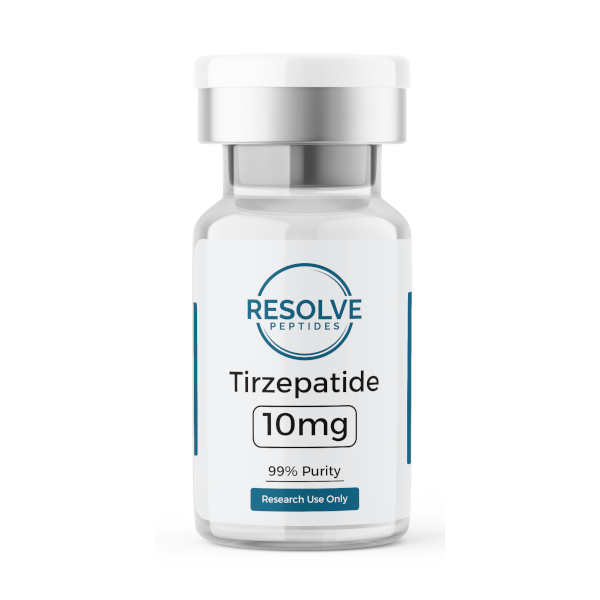
Tirzepatide
Synthetic GIP / GLP-1 Dual Receptor Agonist | Metabolic Research Compound
Tirzepatide (LY3298176) is a synthetic 39-amino acid modified peptide that functions as a dual agonist at the glucose-dependent insulinotropic peptide receptor (GIPR) and the glucagon-like peptide-1 receptor (GLP-1R). It has been studied extensively in clinical research settings for its effects on metabolic parameters, glycemic measures, and body composition in defined research populations.
SKU: RP-Tirzepatide
Overview
Tirzepatide is a 39-amino acid modified peptide engineered on the native GIP sequence, incorporating two alpha-aminoisobutyric acid (Aib) substitutions at positions 2 and 13 to improve protease resistance, a C-terminal amide, and a fatty acid conjugation at lysine position 20 via a linker to 1,20-eicosanedioic acid (a C20 fatty diacid). This fatty acid modification enables albumin binding in circulation, extending plasma half-life and supporting once-weekly dosing intervals in clinical study settings. Its dual agonist pharmacological profile — engaging both GIPR and GLP-1R — distinguishes it structurally and mechanistically from GLP-1R-only agonists, and has been examined in research investigating the combined metabolic contributions of both receptor systems.
Research into Tirzepatide has examined receptor binding kinetics and functional potency at both targets, downstream signaling through cAMP and insulin secretion pathways, and the pharmacological consequences of simultaneous GIPR and GLP-1R engagement. Clinical investigations have examined secondary endpoints spanning glycemic parameters, body composition, lipid profiles, and other metabolic measures across defined research populations.
Chemical Profile
| Property | Value |
|---|---|
| Molecular Formula | C₂₂₅H₃₄₈N₄₈O₆₈ |
| Molecular Weight | 4813.53 g/mol |
| CAS Number | 2023788-19-2 |
Research Findings
GIP and GLP-1 Dual Receptor Pharmacology Research
Tirzepatide has been studied as a dual GIPR and GLP-1R agonist, with research examining its binding affinity and functional potency at each receptor target independently and in combination. Preclinical pharmacological characterization has examined GIPR-mediated cAMP signaling in GIP-responsive tissues alongside GLP-1R activation in pancreatic beta cells and enteroendocrine cell populations. Research has investigated how the C20 fatty acid modification and Aib substitutions influence receptor engagement duration and pharmacokinetic half-life in experimental and clinical settings. The structural distinction between Tirzepatide and GLP-1R-selective peptides has been examined as a model for studying GIPR-specific contributions to metabolic signaling pathways.
Metabolic and Body Composition Research
Clinical research has examined Tirzepatide for its effects on body composition parameters in metabolically characterized research populations, with observations on body weight measures, adipose tissue distribution, and lean mass parameters reported across clinical study settings. Research examining GIPR and GLP-1R co-activation has investigated hypothesized additive or synergistic contributions to energy intake signaling, gastric emptying dynamics, and adipose tissue biology relative to single-receptor pharmacological models. Secondary metabolic parameters examined alongside body composition data have included circulating triglyceride levels, total cholesterol fractions, HDL and non-HDL measurements, and liver fat parameters in clinical research populations.
Glycemic Parameter and Insulin Secretion Research
Research has examined Tirzepatide's effects on glycemic parameters through the combined engagement of GLP-1R and GIPR — two receptor systems with distinct but complementary roles in glucose-stimulated insulin secretion. GLP-1R activation has been studied for its effects on glucose-dependent insulin release, glucagon suppression, and beta cell function. GIPR activation contributes a complementary glucose-stimulated insulin secretory signal and has been examined for its interactions with GLP-1R-mediated pathways in clinical studies. Secondary glycemic endpoints reported in clinical research settings have included fasting plasma glucose, postprandial glucose dynamics, and HbA1c measurements as research parameters in defined study populations.
Cardiovascular Metabolic Parameter Research
Clinical research examining Tirzepatide has included secondary cardiovascular metabolic endpoints as part of broader metabolic profiling in research populations. Observations on lipid parameters — including triglycerides, LDL cholesterol fractions, and blood pressure measurements — have been reported as secondary endpoints in clinical studies examining the compound's metabolic profile. Research into the mechanisms underlying these observations has examined GLP-1R-mediated effects on myocardial metabolism and endothelial function in preclinical cardiovascular models. These cardiovascular metabolic parameters have been studied as secondary research measures rather than primary endpoints in the published clinical literature.
Areas of Research
- GIP and GLP-1 dual receptor pharmacology and signaling studies
- Metabolic receptor biology and dual-agonist pharmacological modeling
- Body composition and adipose tissue parameter research
- Glycemic parameter, insulin secretion, and beta cell research
- Lipid metabolism and cardiovascular metabolic parameter studies
- Energy intake signaling and gastric emptying research
This product is intended for laboratory and scientific research purposes only. It is not intended for human or animal consumption, therapeutic use, or any other application. All purchasers must be 18 years of age or older.
The Certificate of Analysis (COA) for this product is available for download: View COA / HPLC / MS Report.
Shipping Policy
- Orders ship within 1-2 business days
- Free shipping on orders over $150
- Standard shipping: $9.99 (orders under $75)
- Reduced shipping: $5.99 (orders $75–$149.99)
- Discreet packaging on all orders
- Tracking provided via email
No reviews yet. Be the first to review this product.
Sign in to leave a review.
You May Also Like
Retatrutide 10 mg