

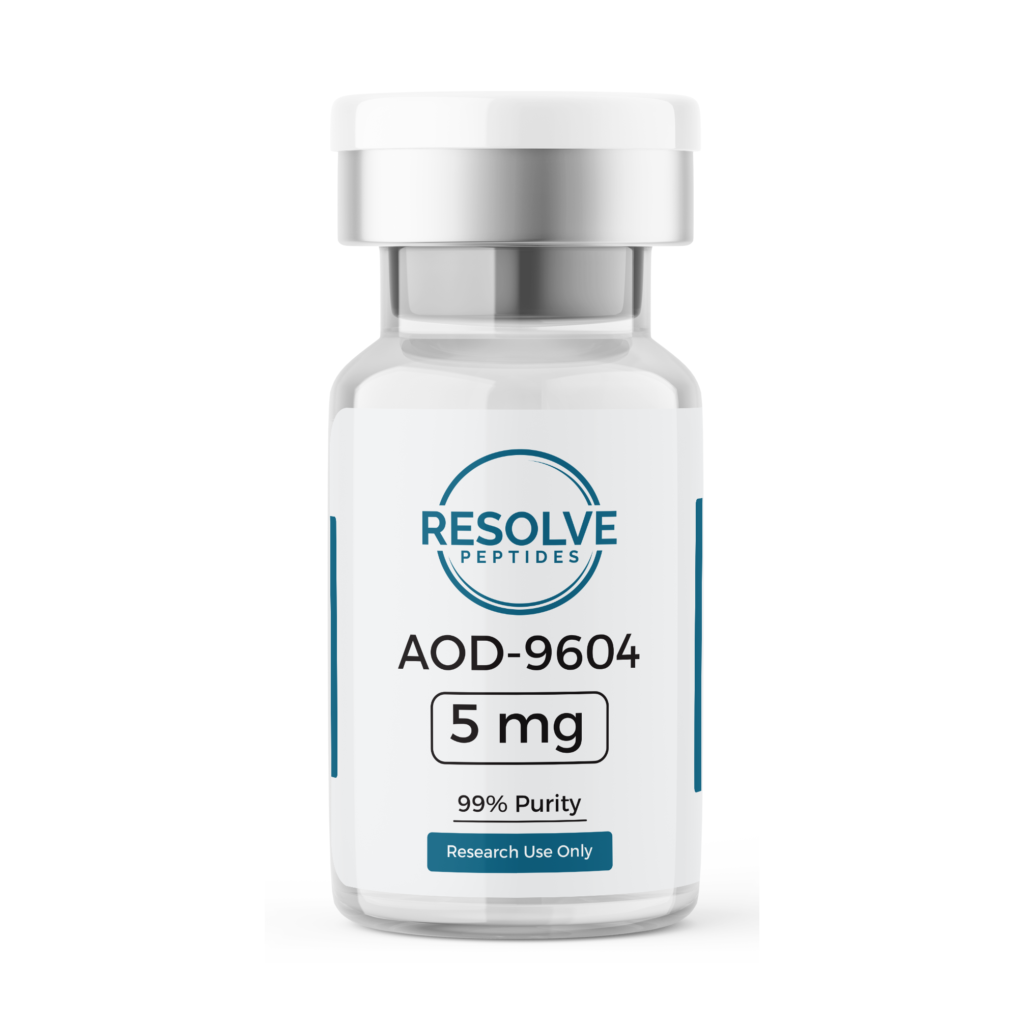
Description
Overview
Mechanism: AOD‑9604 mimics the C‑terminal region of hGH involved in fat metabolism. It appears to activate lipolytic pathways and inhibit lipogenesis in adipocytes, with minimal activation of the IGF‑1 axis compared to native hGH. Study Insights: Preclinical models suggest increased breakdown of triglycerides and reduced formation of new fat, particularly in white adipose tissue depots. Select studies report improved markers of lipid handling without overt somatotropic effects. Key Findings: The peptide’s design aims to separate fat‑metabolism signaling from growth signaling, potentially narrowing effects to adipose regulation.
Chemical Makeup
Type: Synthetic peptide (hGH fragment analog 176–191) Other Names: hGH 176–191 analog, AOD9604 Form: Typically studied in peptide form; research emphasizes parenteral (injectable) routes in preclinical/experimental contexts.
Adipose Tissue & Lipid Metabolism
Mechanism: Promotes lipolysis (hormone‑sensitive and adipose triglyceride lipase pathways) and may down‑modulate lipogenic enzymes in adipocytes; may also influence beta‑adrenergic/cAMP signaling relevant to fat mobilization. Study Insights: Animal models have shown reductions in fat mass and adipocyte size, with preservation of lean mass under certain diet conditions. Some reports note depot‑specific effects (visceral vs.
subcutaneous) and improved circulating lipid profiles. Key Findings: Signals a shift toward fatty‑acid utilization and away from storage, aligning with reductions in white fat depots in preclinical work.
Glucose & Insulin Considerations
Mechanism: By avoiding strong activation of the IGF‑1 axis, AOD‑9604 is hypothesized to exert fewer direct effects on glucose disposal than full hGH. Indirect metabolic changes (via altered lipid flux) can still influence insulin sensitivity. Study Insights: Limited studies suggest neutral to modest effects on fasting glucose/insulin in short‑term settings; outcomes may depend on diet and baseline metabolic state. Key Findings: Metabolic monitoring is a common research practice due to interplay between lipid and glucose pathways.
Inflammation & Adipokines
Mechanism: Changes in adipocyte activity can modulate adipokine secretion and low‑grade inflammation associated with enlarged adipose depots. Study Insights: Select models report trends toward improved inflammatory markers accompanying fat‑mass changes; data remain heterogeneous and time‑course dependent. Key Findings: Any anti‑inflammatory observations appear secondary to shifts in adipose tissue function rather than a primary immunomodulatory action.
Safety / Tolerability (Research Context)
Mechanism: Designed to reduce off‑target growth signaling relative to hGH by focusing on the 176–191 region. Study Insights: Experimental reports generally note good short‑term tolerability in research settings; comprehensive, long‑duration safety data are limited. No claims are made regarding clinical efficacy or approved medical use. Key Findings: Safety findings remain context‑specific to experimental models; translation requires formal clinical evaluation.
Disclaimer
All products offered by resolvepeptides.com is intended strictly for laboratory and scientific research purposes only. These products are not approved by the FDA, are not medicines or supplements, and are not sold for human consumption, medical treatment, or veterinary use. Any discussion of potential benefits is based solely on preclinical findings.
Reviews
There are no reviews yet.