
Peptides
Peptides

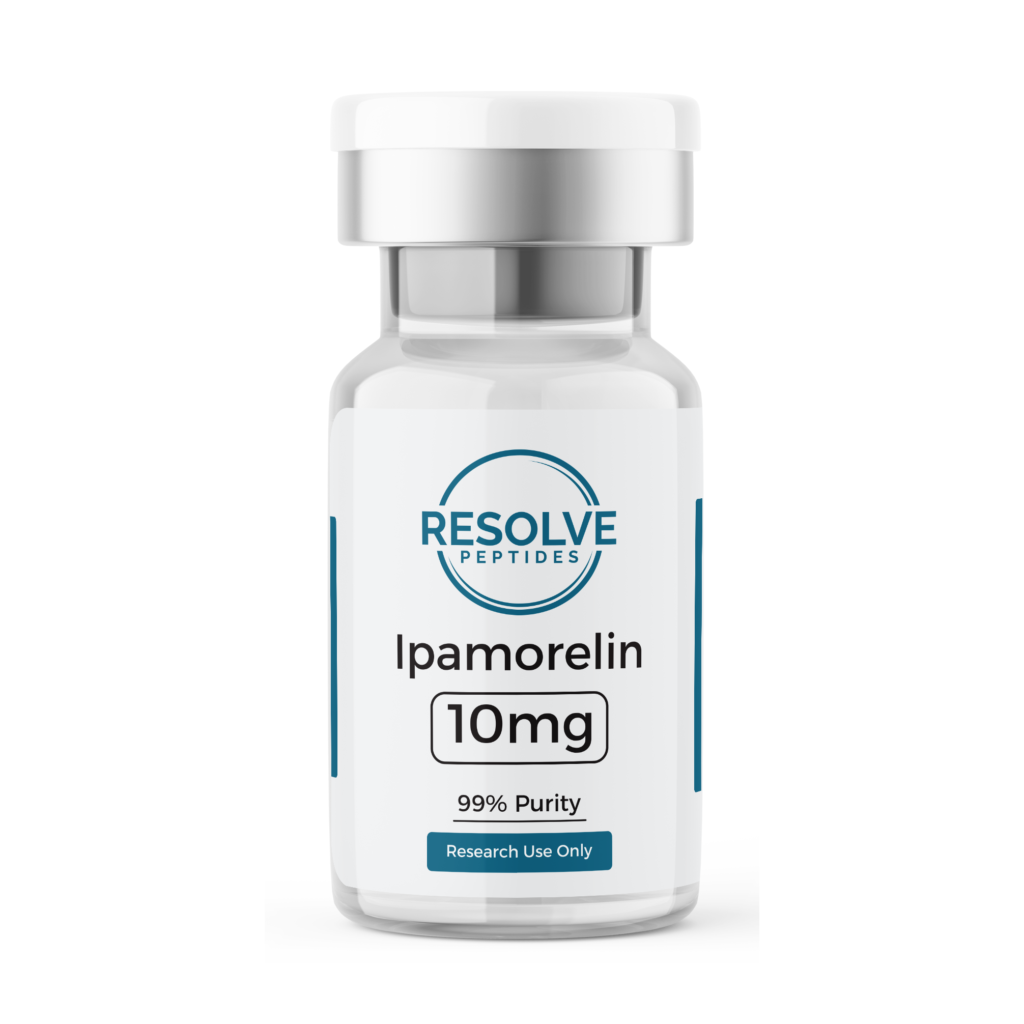
Ipamorelin

$35.00

Ipamorelin is a synthetic pentapeptide recognized for its precise interaction with the ghrelin and growth hormone secretagogue receptor (GHS-R). Distinguished by its exceptional receptor selectivity, it stimulates growth hormone (GH) release without influencing other hormonal pathways such as ACTH, prolactin, luteinizing hormone, follicle-stimulating hormone, thyroid-stimulating hormone, or cortisol secretion. This high degree of specificity has made Ipamorelin a focal point in scientific research—not only for its potential therapeutic applications but also as a model compound for exploring the mechanisms underlying receptor-targeted GH modulation. Furthermore, its activity is closely linked to the regulation and regeneration of musculoskeletal tissues, contributing to overall structural growth and cellular repair.

Buy More, Save More

from 5 pcs.from 10 pcs.from 15 pcs.
$35.00 $31.50$35.00 $28.00$35.00 $26.95

No Data Available

All peptides offered by Resolve Peptides are produced through the lyophilization (freeze-drying) process, a method that preserves molecular stability during handling and transport for approximately 3–4 months. Once reconstituted with bacteriostatic water, the solution must be stored under refrigeration to maintain integrity, where it generally remains viable for up to 30 days. Lyophilization, also referred to as cryodesiccation, is a specialized dehydration technique in which the compound is frozen and then placed under reduced pressure. This causes the frozen water content to sublimate directly from solid ice to vapor, leaving behind a stable, crystalline peptide powder. The resulting white, porous material can be kept at room temperature until reconstitution is required. After delivery, peptides should be safeguarded from light exposure and stored in a cool environment. For short-term use spanning several days to weeks, refrigeration at or below 4°C (39°F) is recommended. While lyophilized peptides may remain structurally intact at room temperature for weeks, cold storage provides added assurance of stability for ongoing research. For extended preservation lasting months or years, ultra-low freezing is preferred. Storage at –80°C (–112°F) offers the most reliable option for maintaining peptide quality and consistency over long durations. For detailed guidance on peptide handling and storage protocols, please refer to: Peptide Storage Information – 1stPharma.com For extended preservation, particularly for storage spanning multiple months to years, peptides are best kept in ultra-low freezers at approximately –80°C (–112°F). Under these long-term conditions, structural stability is maximized, ensuring peptides retain their quality and suitability for future research applications.

Description

What is Ipamorelin?

Ipamorelin is a highly selective synthetic pentapeptide that functions as an agonist of the ghrelin and growth hormone secretagogue receptor (GHS-R). Among known growth hormone secretagogues, it exhibits one of the highest levels of receptor selectivity, stimulating growth hormone (GH) release without influencing ACTH, prolactin, follicle-stimulating hormone, luteinizing hormone, thyroid-stimulating hormone, or cortisol secretion.
Owing to this remarkable specificity, Ipamorelin has become a focal point of research for its therapeutic potential and as a model compound for understanding receptor-binding precision and downstream endocrine modulation.


Ipamorelin Structure

Source: PubChem
Sequence: Aib-His-D-2Nal-D-Phe-Lys
Molecular Formula: C₃₈H₄₉N₉O₅
Molecular Weight: 711.87 g/mol
PubChem CID: 9831659
CAS Number: 170851-70-4


Research Overview

1. Ipamorelin and Glucocorticoid-Induced Side Effects

Glucocorticoids, widely prescribed for inflammatory and autoimmune conditions, often cause adverse effects such as bone demineralization, muscle wasting, and altered metabolism. Laboratory investigations demonstrate that Ipamorelin can mitigate or even reverse several glucocorticoid-related complications by supporting anabolic recovery and counteracting catabolic signaling pathways.

2. Bone Metabolism and Structural Integrity

One of the most serious consequences of chronic corticosteroid exposure is osteoporosis and increased fracture risk. Traditional treatments like bisphosphonates and monoclonal antibodies carry notable limitations. In contrast, Ipamorelin has been shown in preclinical studies to halt corticosteroid-induced bone loss and significantly enhance osteoblastic activity—producing up to a four-fold increase in bone formation. Additional findings indicate improved bone mineral density and systemic skeletal strength, with concurrent reductions in steroid-induced myopathy and visceral adiposity.

3. Effects on Muscle Preservation and Anabolism

Animal research reveals that Ipamorelin helps maintain nitrogen balance and limits hepatic nitrogen wastage during glucocorticoid therapy. By mitigating catabolic muscle loss and promoting tissue regeneration, Ipamorelin offers dual benefits for maintaining lean body mass and accelerating recovery following prolonged steroid exposure.

4. Ipamorelin and Glucose Regulation

In diabetic animal models, Ipamorelin has been shown to enhance pancreatic insulin secretion, likely through modulation of calcium ion channels within β-cells of the islets of Langerhans. This action provides insight into the peptide’s influence on glucose metabolism and suggests possible avenues for future therapeutic development in metabolic and endocrine disorders.

5. Post-Operative Ileus (POI) Investigations

Post-operative ileus, characterized by temporary cessation of gastrointestinal motility after surgery, is a common cause of delayed recovery. Early clinical studies with Ipamorelin demonstrated a measurable reduction in the time to first meal—averaging approximately 12 hours sooner than control groups. Although the initial pharmaceutical development was discontinued due to commercial viability concerns, the data indicate that Ipamorelin enhances gastric motility and may serve as a foundation for future combination therapies aimed at managing POI.

6. Use as a Ghrelin Receptor Imaging Agent

Because the ghrelin receptor is often overexpressed in certain malignancies and in cardiac failure, Ipamorelin’s strong receptor affinity makes it a candidate for development as a positron emission tomography (PET) imaging probe. Preliminary in-vitro experiments support this diagnostic potential, and further studies are underway to evaluate its performance and interpretive standards in vivo.


Current Research Perspective

Despite promising biological data, Ipamorelin remains underexplored in contemporary research. Its distinctive pharmacological profile—strong anabolic influence, high receptor selectivity, and minimal hormonal cross-reactivity—positions it as a valuable tool for scientific investigation into endocrine modulation, musculoskeletal regeneration, and metabolic homeostasis. Renewed academic and clinical interest could reveal additional therapeutic and diagnostic applications of this versatile peptide.


Product and Research Notice

Ipamorelin demonstrates low oral and excellent subcutaneous bioavailability in murine models, with a minimal side-effect profile. Dosages observed in animal studies do not directly extrapolate to human application.
Ipamorelin offered by Resolve Peptides is strictly intended for laboratory and in-vitro research use only. It is not approved for human or veterinary administration. Purchase is restricted to licensed researchers and accredited research institutions.

Disclaimer

All products offered by resolvepeptides.com are intended strictly for laboratory and scientific research purposes only. These products are not approved by the FDA, are not medicines or supplements, and are not sold for human consumption, medical treatment, or veterinary use. Any discussion of potential benefits is based solely on preclinical findings.


Referenced Citations

  1. Raun K et al., Eur J Endocrinol., 139(5):552–561 (1998).

  2. Andersen N B et al., Growth Horm IGF Res., 11(5):266–272 (2001).

  3. Svensson J et al., J Endocrinol., 165(3):569–577 (2000).

  4. Aagaard N K et al., Growth Horm IGF Res., 19(5):426–431 (2009).

  5. Adeghate E, Ponery A S., Neuro Endocrinol Lett., 25(6):403–406 (2004).

  6. Beck D E et al., Int J Colorectal Dis., 29(12):1527–1534 (2014).

  7. Greenwood-Van Meerveld B et al., J Exp Pharmacol., 4:149–155 (2012).

  8. Fowkes M M et al., Eur J Med Chem., 157:1500–1511 (2018).

Additional information

Weight 0.005 g
Strength (mg/vial)

5 mg

Reviews

There are no reviews yet.

Be the first to review “Ipamorelin”

Your email address will not be published. Required fields are marked *

Get VIP Access!

Subscribe to get exclusive insights on new products, research insights, breakthroughs, and special offers.

By subscribing, you agree to receive our newsletters, promotional emails, and automated updates related to your shopping activity. You confirm that you have read and agree to our Privacy Policy and Terms. You may unsubscribe at any time.

Research Use Only – Age Verification

Resolve Peptides provides peptides strictly for laboratory research and scientific studies.  All products sold on this website are intended for research use only and are not for human or animal consumption, medical use, diagnosis, or treatment.

By entering this site, you confirm that:

  •  You are 18 years of age or older
  • You are accessing this site for research and laboratory purposes only
  • You understand all products are not intended for personal or clinical use

I confirm I am 18 years or older and understand these products are for research use only